



The Quick answer
Most delays with custom crates and cases don’t come from the crate build itself — they come from missing information, unclear specs, or a supplier that’s already backed up before your order lands. You can avoid almost all of it by locking in dimensions and load details early, confirming export treatment requirements upfront, and working with a supplier who quotes realistic lead times rather than the fastest possible number.
At Crate n Pack Solutions, most custom crates and cases are built, ready and delivered to our Melbourne customers, within 2–5 business days, because we ask the right questions before the timber gets cut, not after.
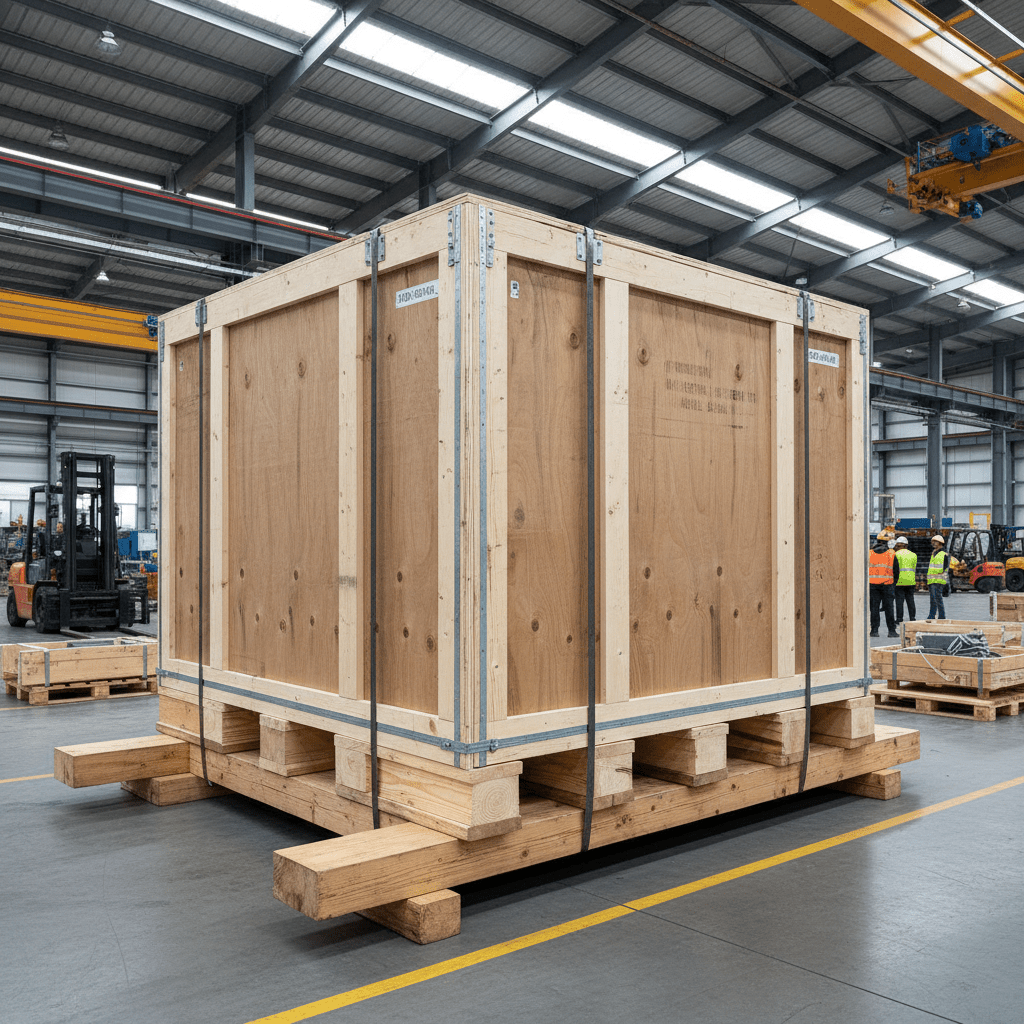
Key takeaways
-
- The biggest cause of crate order delays is incomplete or changing specifications, not manufacturing capacity.
-
- Export treatment (ISPM 15) needs to be confirmed before the build starts — adding it later can mean starting again.
-
- A supplier’s stated lead time is only useful if it reflects their actual current workload, not a best-case scenario.
-
- Ordering crates at the same time you’re finalising freight bookings, rather than after, avoids last-minute scrambles.
-
- Clear dimensions, weight, and handling details upfront are the single biggest thing you control to keep your order on schedule.
Why crate orders actually get delayed
A late crate rarely feels like a big problem until it’s holding up everything else — a truck booked to collect, a ship with a cut-off date, or a customer waiting on equipment. By the time it becomes urgent, there’s often not much room left to fix it.
Most delays trace back to one of a handful of causes, and almost none of them are about the crate itself being hard to build.
Incomplete specs at the time of order. If dimensions, weight, or export requirements are estimated rather than confirmed, the build can start on the wrong assumptions. Fixing that partway through costs more time than getting it right at the start.
Late changes. A dimension that changes after the crate is already underway, or a decision to add export treatment after the timber’s been cut untreated, usually means restarting that part of the job.
Supplier backlog. Some suppliers quote a “standard” lead time that doesn’t reflect what’s actually in their workshop right now. If they’re already three weeks behind, your “5-day” quote might not mean much.
Waiting until the last minute. Ordering a crate the same week your freight is due to leave doesn’t leave any buffer if something needs adjusting — a wrong measurement, a missing compliance detail, or a supply issue with timber.
Unclear export requirements. If a shipment needs ISPM 15 heat-treated timber and that’s not flagged at the order stage, it can mean delays at the build, or worse, a hold-up at the border once the crate’s already left.
What you can control (and what you can’t)
You can’t control a supplier’s existing workload or a shipping line’s cut-off date. But most of what causes delays sits squarely in your hands.
| What causes the delay | Who it’s on | How to avoid it |
|---|---|---|
| Estimated (not measured) dimensions | You | Confirm exact measurements before ordering |
| Export treatment added late | You / supplier | Flag ISPM 15 requirements at the quote stage |
| Supplier already backed up | Supplier | Ask for their current lead time, not their advertised one |
| Order placed too close to freight date | You | Order as soon as freight dates are known, not after |
| Unclear load or handling details | You | Provide weight, centre of gravity, and lifting method upfront |
| Timber shortage or custom material | Supplier | Ask if your build uses standard or special-order timber |
Information that speeds your order up
The fastest way to avoid delays is giving your supplier everything they need in the first conversation, rather than in three follow-up emails. That means:
-
- Exact dimensions (length, width, height) — measured, not estimated
-
- Weight of the item, and where the load sits (centre of gravity)
-
- Whether the shipment is domestic or export, and the destination country if it’s export
-
- How the crate will be handled — forklift, crane, or both
-
- Your required delivery date, ideally with a few days’ buffer
-
- Whether you need flat-packed or fully assembled delivery
A good supplier like Crate n Pack Solutions, will be asking you these questions if you don’t offer them first. If they’re not, that’s often a sign they’re quoting a generic build rather than one suited to your actual cargo — which is also how you end up with a crate that isn’t rated for what you’re putting in it.
Why export compliance timing matters so much
ISPM 15 treatment isn’t something that can easily be bolted on after a crate is built. The timber needs to be heat-treated and stamped before assembly, and the certification needs to travel with the shipment. If this gets missed or added as an afterthought, it can mean the crate needs to be rebuilt from treated stock, or worse, the shipment gets held at the border because the paperwork doesn’t match.
All export crates and cases we build are ISPM 15 certified from the start, stamped with our IPPC producer code, and accepted in more than 85 countries — so it’s one less thing to chase down separately once your freight date is locked in.
How to time your order against your freight schedule
The best practice we see from businesses that never have crate delays: they order the crate as soon as the freight booking is confirmed, not once the goods are ready to ship. That gives a few days of natural buffer if anything needs adjusting, without pushing the actual freight date.
If your timeline is genuinely tight, say so upfront. A supplier who can turn around custom builds quickly (we typically manage 2–5 business days) can often prioritise urgent jobs — but only if they know it’s urgent before they start, not the day before your truck arrives.
Get your crate moving without the back-and-forth
Speak to out team at Crate n Pack Solutions. We build all types of custom wooden crates, cases, and plywood boxes at our Dandenong South facility, with most jobs completed in 2–5 business days. Send is an email includingdimensions, weight, and export requirements upfront and we’ll quote a realistic timeline — not just the fastest one we can say.
Request a fast, free quote or call (03) 8759 1696 and we’ll get your build started the same day.
FAQs
How long does it typically take to get a custom wooden crate or case built? With Crate N Pack Solutions, most of our custom crates and cases are built within 2–5 business days, depending on size, complexity, and current order volume. Urgent jobs can often be prioritised if flagged at the time of quoting.
What information do I need to provide to avoid delays? Exact dimensions, item weight, centre of gravity, handling method (forklift/crane), destination (if export), and required delivery date. The more specific this is upfront, the less back-and-forth is needed.
Does export treatment (ISPM 15) add extra time to my order? Not if it’s flagged at the start — ISPM 15 treated timber is standard for our export builds. It only causes delays when it’s requested after a crate has already been built with untreated timber.
Can I get a custom crate built urgently? Often, yes. If you have a tight deadline, tell us when you request your quote and we’ll let you know what’s realistically achievable given current workload.
What’s the best time to order a crate relative to my freight booking? As soon as your freight date is confirmed. Ordering early gives buffer time for any adjustments without putting pressure on your shipping deadline.

Related reading